

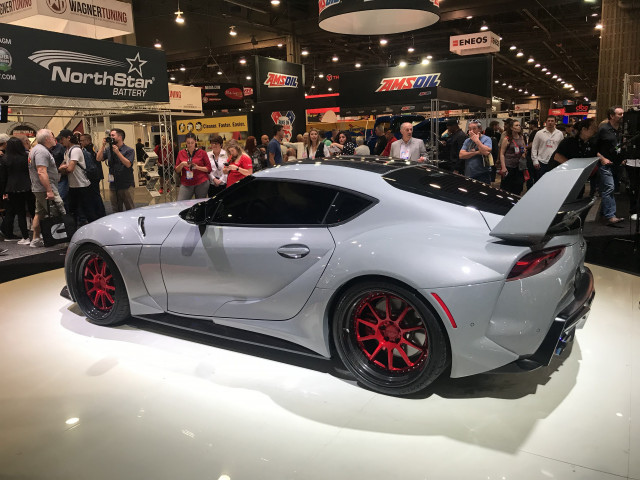
Few modern sports cars carry as much expectation as the Supra. Its name brings with it decades of motorsport, tuning culture and owner enthusiasm, and the current car is judged against that history as well as against its contemporaries. For owners, that creates both an opportunity and a pressure: the car invites personalisation, yet every change is compared with a strong original design and with the many modified examples seen online.
The sensible response is to start slowly. The Supra already has a distinctive shape, with a long bonnet, compact cabin, wide rear haunches and a short rear deck. A package chosen for photographs alone can quickly become impractical on real roads, while a restrained package chosen for coherence can still feel personal after years of use.
This article looks at Supra styling from a practical owner’s perspective. It covers heritage and proportion, the difference between show styling and usable styling, and the checks that protect performance, reliability and resale.
Heritage and Why It Shapes Expectations
The Supra name is associated with powerful, tunable sports cars, and that history influences how owners and onlookers judge a modified example. A change that introduces an unrelated visual language, or that exaggerates one feature at the expense of the whole car, can look disconnected, however well made the individual parts are.
That does not mean owners should copy the past. The current Supra is a modern car, with its own proportions, safety systems and aerodynamic requirements, and it should be judged as such. A modern package that respects that balance, by following the car’s lines and keeping finishes consistent, is more likely to age well than one that chases a trend.
Owners should also remember that online images can mislead. Cars photographed at shows, on track or with professional lighting may have ride heights, wheel sizes and camera angles that are not representative of daily use. Comparing fitted examples on cars used in similar conditions is a more reliable guide than collecting dramatic images.
Proportion, Stance and the Long Bonnet
Proportion is the central challenge on the Supra. Its long bonnet and short cabin create a strong forward emphasis, and its wide rear haunches give it a planted stance from behind. Side skirts should follow the sill and link the front and rear, without adding a heavy step that shortens the visual length of the car.
At the rear, the short deck and prominent haunches mean that a spoiler or diffuser is highly visible. Owners should decide which character they want, and should consider how the car will look from the rear in traffic, where it is seen most often, as well as from the side in a photograph.
Wheel and tyre choices interact with exterior styling. Larger wheels, lower ride height and wider tyres can make a package look more integrated, while standard wheels and ride height can make the same package look more prominent. Owners should judge the package as it will be used, with the wheels and suspension the car actually has, rather than as it appears on a show car with a different setup.
Performance, Cooling and Driver Assistance
The Supra is a performance car, and exterior changes must not compromise the systems that support that performance. Owners should check that intakes remain clear, that no part presses against a cooler or duct, and that the car is monitored for temperature warnings after fitting, especially in warm weather or spirited driving.
Driver-assistance systems also need protection. Cameras, parking sensors and radar units are integrated into the bumpers, and a styling part must not cover or shift them. Appearance should never take precedence over the correct functioning of safety-related equipment.
Weight and balance deserve realistic expectations. Replacing a small number of exterior panels will not transform the car’s performance, and no specific gain in acceleration, braking or lap time should be assumed from styling parts alone. Owners who want measurable performance changes should seek specialist advice and testing, rather than relying on styling descriptions.
Fitting, Insurance and Resale
Professional fitting is strongly recommended for a Supra exterior package, particularly for low front parts, wide side skirts and rear components that carry aerodynamic load. The car should be inspected after fitting in daylight, from several angles, and driven at a range of speeds to check for noise, vibration or movement.
Insurance should be notified before fitting, not after an incident. Exterior parts can affect how an insurer views the car, and the owner should confirm whether the parts are covered and whether any policy conditions apply. A written note on the policy is far more useful than a verbal assurance that cannot be evidenced.
Resale is another practical consideration. When owners are researching a complete exterior set for this model, descriptions such as toyota supra body kits can help clarify what a package typically includes, but compatibility for the exact model year, trim and factory options must be confirmed separately in writing.
Frequently Asked Questions
1. Does the Supra need a full exterior package to look complete?
No. A small number of coherent, well-fitted parts can be enough, especially if they follow the car’s original lines and share a consistent finish. A full package suits owners who want a stronger change, but it should be planned as a whole, with front, side and rear elements balanced against each other.
2. Will styling affect reliability or cooling?
It should not, if fitment is confirmed for the exact car and intakes, coolers and sensors remain unobstructed. Check temperatures and driver-assistance systems after fitting, and investigate any warning, noise or change in behaviour promptly. Professional fitting reduces the risk of a part interfering with cooling or safety systems.
3. How can I protect resale value when styling a Supra?
Choose a restrained, coherent package, have it fitted professionally, keep original parts and full records, and inform the insurer. A documented, well-maintained car with a clear history of careful changes is more reassuring to a buyer than a car with undocumented, extreme modifications.
Conclusion
Styling the modern Supra works best when heritage is treated as a guide to proportion, not as a reason to exaggerate. The result should be a Supra that still looks and drives as its designers intended, only sharper, more individual and more satisfying to live with every day.